

If you’re planning to move to Spain, start a business, or work there longer than three months, you’ll face a straightforward reality: you need an NIE. This nine-digit identification number isn’t just another bureaucratic formality—it’s your gateway to everything from employment to banking and tax compliance. Let me walk you through the entire process so you can get it right the first time.
What Is an NIE and Why You Actually Need It
An NIE (Número de Identidad de Extranjero) is Spain’s foreigner identification number. Think of it as your digital social security number in the Spanish system, though it serves a much broader purpose. You’ll need it for taxes, employment, business registration, healthcare, rental contracts, and basically every official interaction in Spain.
Here’s the thing: without an NIE, you can’t legally work, start a company, open a bank account, or sign rental agreements. Some expats skip this step and end up paying fines or running into serious complications later. Getting it done upfront saves you months of headaches down the road.
The NIE is permanent—the number stays with you for life—but the documentation expires and needs renewal depending on your situation. For employees, typically every three years; for self-employed individuals, sometimes annually. The good news is that renewal is usually simpler than the initial application.
The Step-by-Step Process: How to Get an NIE in Spain
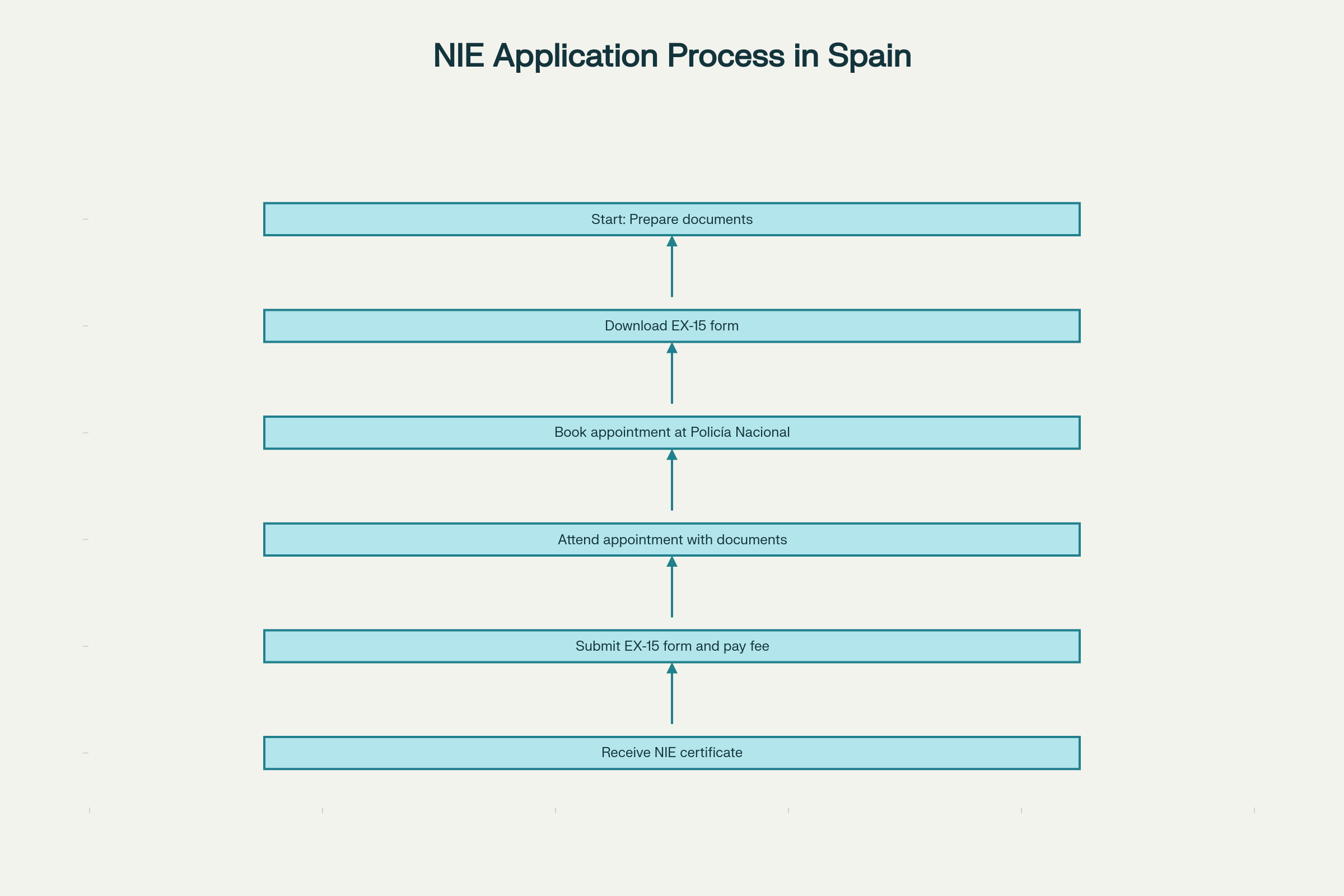
Getting your NIE involves six straightforward stages, though the timeline can vary based on how busy your local Policía Nacional office is.
Stage 1: Get the EX-15 Form
Start by obtaining the EX-15 form (Solicitud de NIE). You have two options here: download it directly from the Spanish National Police website or grab it in person at your nearest Policía Nacional office. The form itself is free online, though some offices may charge a small fee if you pick it up physically.
Stage 2: Gather Your Documents
Before booking an appointment, compile everything you’ll need. Bringing incomplete documentation is one of the most common reasons applications get rejected, and you’ll have to start over.
Stage 3: Book Yoуur Appointment
This is crucial. Walk into a police station expecting to be seen same-day? Not happening. Most Policía Nacional offices operate on an appointment-only basis, and wait times typically run 2–8 weeks depending on where you are. Book through the official appointment portal or call your local office. Some regions also allow phone or online booking.
Stage 4: Show Up Prepared
On appointment day, bring your originals and copies of everything. The officials will verify documents, take your biometric data, and ask a few questions about your employment or business plans. This usually takes 15–30 minutes.
Stage 5: Pay the Administrative Fee
The fee hovers around €15–20 (exact amount varies by region). Payment is typically done at the appointment using the official Tasa 790 receipt system. Some offices accept cash; others prefer transfer. Check with your local office beforehand.
Stage 6: Receive Your NIE Certificate
Here’s where it gets pleasant: most applicants receive their NIE certificate on the spot or within 1–2 business days. Once you have it, you’re legally recognized in Spain’s system and can open bank accounts, sign contracts, and handle tax matters.
Documents You’ll Actually Need: The Complete Checklist
Let’s be specific because vague guidance is what gets applications rejected.
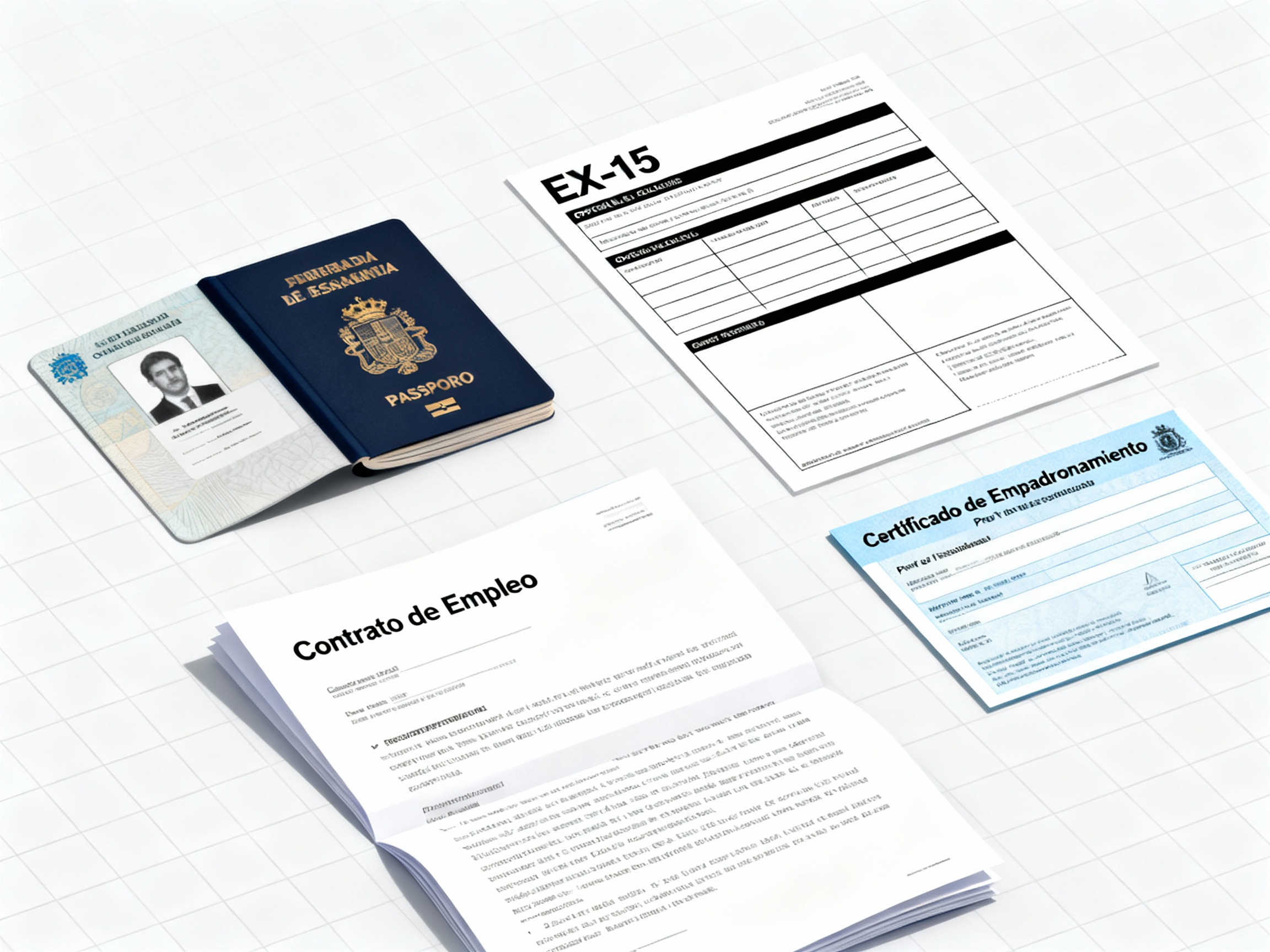
Essential documents (bring originals and copies):
Valid passport or equivalent travel document
Completed EX-15 form (signed and dated)
Proof of Spanish residence (empadronamiento certificate OR rental agreement)
Employment contract (if employed) OR proof of self-employment (business registration, bank statements showing income)
Supporting documents (depends on your situation):
Bank statement showing economic capacity (especially for self-employed, entrepreneurs, or investors)
Proof of address (utility bill, rental receipt, or empadronamiento)
Professional certificate or qualifications (if relevant to your employment)
Payment receipt for the administrative fee
If you’re self-employed or a digital nomad, the rules are slightly different. You don’t need a job contract, but you must demonstrate financial capacity through bank statements or business records. The amount varies, but as a rule, showing €2,000–3,000 in your account signals stability.
NIE Application: Self-Employed vs. Employee vs. Business Owner
Here’s how your situation shapes what you need to bring:
| Factor | Self-Employed/Freelancer | Employee | Business Owner |
|---|---|---|---|
| Required Form | EX-15 | EX-15 | EX-15 |
| Job Contract Needed | No | Yes | Business registration documents |
| Proof of Income | Bank statement, invoices | Salary slip, employment letter | Tax documents, business accounts |
| Timeline | 3–8 weeks | 2–6 weeks | 4–10 weeks |
| Certificate Validity | 1 year (typically) | 3 years | 3 years |
The timelines can stretch if your local office is particularly busy or if they request additional information. Don’t be surprised if they ask for clarifications—just respond quickly and you’ll move forward smoothly.
Common Mistakes That Slow Everything Down
Even with the best intentions, small oversights derail applications. Here’s what to avoid:
Not booking in advance. Showing up without an appointment means joining the waiting list and wasting your day.
Incomplete documentation. Bring exactly what’s required, plus one extra copy of everything. Better safe than sorry.
Using an expired passport. They won’t accept it. Get a renewal if needed before your appointment.
Skipping the empadronamiento. This municipal registration proves your Spanish address and accelerates approval.
Ignoring follow-up communications. If Policía Nacional requests additional documents, respond within the given timeframe. Delays pile up fast.
Wrong fee payment method. Confirm in advance whether your office accepts cash, bank transfers, or card payments.
Here’s the truth: An NIE isn’t optional—it’s your first legal step in Spain. Without it, you’re essentially operating in a grey zone, and Spanish authorities notice eventually.
Timeline Expectations and Realistic Planning
Let’s set expectations so you’re not caught off guard.
- Appointment booking: 2–8 weeks after you submit your application. This is often the longest waiting period. Some busy cities like Madrid can push closer to 8 weeks; smaller towns might get you in within 2–3 weeks.
- Processing day: Usually you’ll receive your NIE certificate on the spot. If the office needs to verify something, expect 1–2 business days maximum.
- Total duration: Plan for 3–10 weeks from when you first apply to holding your certificate. If you’re optimized—booked early, documents perfect—you might hit the 3-week mark. If you’re unlucky or detail-oriented, 10 weeks is realistic.
If you’re moving to Spain and need this for employment, start the process immediately upon arrival. Don’t wait. Your employer will thank you, and you’ll avoid administrative penalties.
Why the EX-15 Form Matters
The EX-15 is your application form, and getting it right is half the battle. It’s straightforward—personal details, passport information, employment or self-employment status, and Spanish address. Fill it out carefully, date it, and sign it. Typographical errors are generally forgivable, but make sure your passport number is exact. Photocopies or printed versions from the official website are fine; no need for fancy notarization.
You’ll notice the form asks about your situation (employee, self-employed, investor, family member). Answer honestly. This determines what supporting documents you’ll need and how quickly your application moves through the system.
Getting Your NIE as a Self-Employed Individual or Digital Nomad
If you’re freelancing, running an online business, or working as a digital nomad, the process is slightly different but absolutely doable.
Instead of a job contract, you’ll present proof of economic capacity. A bank statement showing regular income or savings of €2,000+ typically works. Some applicants provide invoices from clients, contracts with agencies, or business registration documents if they’ve already set up a Spanish company.
The timeline for self-employed individuals typically runs 3–8 weeks. It sometimes takes longer because Policía Nacional verifies self-employment claims more thoroughly than employment contracts. This is normal and not a red flag.
If you’re registering as an autónomo (self-employed) in Spain, you’ll need the NIE first before you can formally register with the tax authorities. So prioritize this.
NIE Costs Broken Down
Let’s be clear about money. The administrative fee for an NIE application is small—typically €15–20 depending on your region. This is paid as a Tasa 790 (official fee receipt).
Additional costs to anticipate:
Photocopies: €0.10–0.50 each (bring cash; some offices charge)
Translation of documents: If required, €50–200 (rarely mandatory, but ask)
Empadronamiento registration: €0–50 depending on your municipality
Notarization: €5–20 per document (rarely needed for NIE applications)
So realistically, budget €20–50 total for the entire process unless you need translations.
What Happens After You Get Your NIE
Once you have your certificate in hand, you’re cleared for:
Opening a bank account in Spain
Employment (tax-compliant)
Self-employment registration (autónomo)
Business registration and company formation
Renting property
Healthcare registration
Tax filing and compliance
Hold onto that certificate. You’ll reference the number constantly—for every contract, job application, and official form. Some people recommend making several photocopies and keeping them accessible.
Final Thoughts: Your NIE Is Just the Beginning
Getting an NIE is genuinely not complicated. The frustration usually comes from incomplete preparation or unrealistic timeline expectations, not the process itself. Once you understand what’s required and book your appointment early, you’ll move through it smoothly.
Whether you’re relocating for work, starting a business, or settling in Spain long-term, this is your foundational step. Do it right, do it early, and you’ll avoid the common pitfalls that trap other expats.
Spain’s immigration system is actually more straightforward than many people expect. The NIE process proves it. Bring the right documents, show up on time, and you’re golden.
Frequently Asked Questions
Can I apply for an NIE remotely or online?
Not entirely. While you can download the EX-15 form online and book appointments through the official portal, you must appear in person at a Policía Nacional office for your final appointment and biometric registration. No exceptions for this part.
How long is an NIE valid?
The NIE number itself is permanent and stays with you for life. However, your certificate document expires. For employees, it’s typically valid for 3 years; for self-employed individuals, sometimes 1 year. Check your specific documents for expiry dates and plan your renewal accordingly.
Do I need a work permit if I have an NIE?
For EU/EEA citizens, the NIE covers your work authorization completely. Non-EU nationals need both an NIE and a separate work permit (TIE—Tarjeta de Identidad de Extranjero). The requirements differ significantly based on your nationality and work type.
Can I use my NIE for banking in Spain?
Yes, absolutely. Most Spanish banks require an NIE to open a current account. It’s typically one of the first documents they’ll ask for, especially if you’re receiving salary payments or planning to conduct business.
What happens if my NIE application is rejected?
Rejections usually mean incomplete documents or inconsistencies between your forms and supporting evidence. Contact your local Policía Nacional office, ask specifically what’s missing, correct it, and reapply. Most rejections are completely fixable on a second attempt.
Can I get an NIE without a job offer?
Yes. Self-employed individuals, digital nomads, and entrepreneurs can apply with proof of economic capacity (bank statements) instead of a job contract. However, you’ll still need proof of residence in Spain, typically through an empadronamiento certificate or rental agreement.
Do digital nomads need an NIE in Spain?
If you’re staying longer than 90 days, yes. Digital nomads typically register as self-employed (autónomo) and must have an NIE for tax purposes and legal residency compliance. Spain takes this seriously, so don’t skip it assuming temporary status exempts you.